If you ask me what the most popular food in Cuba is, I’ll tell you straight up: Ropa Vieja. It’s the dish you’ll find on every “paladar” menu, on family tables on Sundays, and the first one that comes to any Cuban’s mind. But our cuisine is a universe of powerful flavors and deep traditions, and stopping at Ropa Vieja would be like listening to only the first bar of a Celia Cruz song.
As a Cuban, I want to take you beyond the easy answer. I want you to understand the “why” behind our flavors, the history behind each dish, and above all, to feel the love with which we cook. So get ready, because we’re about to take a journey through authentic Cuban cuisine.
If you’re planning a trip, don’t miss our complete Cuba travel guide to plan your route, budget, and must-see spots.
The Main Dishes You Can’t Miss at a Cuban Table
The heart of our food lies in the main courses. These are recipes with history, passed down from generation to generation, combining Spanish, African, and Caribbean influences into an explosion of flavor.
Ropa Vieja: The Undisputed Queen and National Dish of Cuba
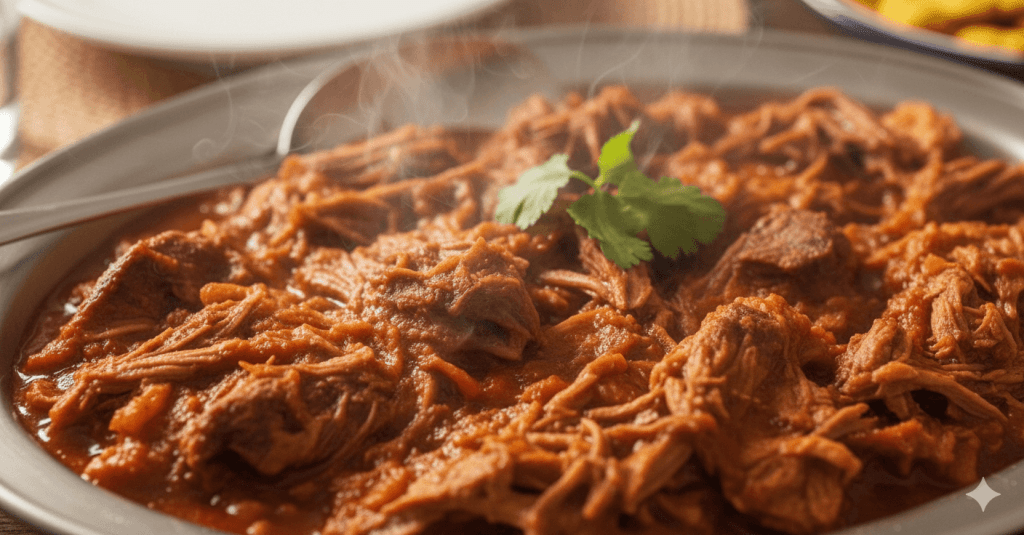
Without a doubt, Ropa Vieja is our star dish. It consists of beef, specifically flank steak, slow-cooked until it can be shredded with a fork (hence its name, which means “old clothes,” resembling shreds of fabric). This meat is then simmered in a “sofrito” base of tomato, onion, bell pepper, and spices that give it a spectacular color and flavor. Served over white rice, it is simply unbeatable. It’s the definition of Cuban comfort food.
Lechón Asado: The Star of Every Family Celebration

If there’s an important celebration in Cuba—Christmas, New Year’s Eve, a wedding—there is roasted pork. The pig is marinated for hours in “mojo” (a mix of sour orange, garlic, and oregano) and slow-roasted until the skin is crispy and golden (the famous “cuerito”) and the meat is so tender it falls apart. The aroma that fills the house as it cooks is the true scent of celebration and family gatherings.
My Personal Weakness: The Treasures of the Caribbean Sea on a Plate
Although Ropa Vieja and Lechón get almost all the fame, I have to confess my personal weakness: seafood. Being an island, we have access to incredible fish and shellfish. A good “camarones enchilados” (shrimp in a mildly spicy tomato sauce) or a fresh grilled lobster with garlic butter are, for me, the true luxury of Cuban cuisine. They don’t always appear in the most typical tourist guides, but I assure you, it’s a taste you won’t forget.
The Inseparable Companions: More Than Just a Side Dish
In Cuba, a main dish never comes alone. The side dishes are just as important and complete the experience.
Arroz Moros y Cristianos (or Congrí): The Soul of the Cuban Plate
Rice and beans are the foundation of our diet. Depending on the region, you might call it by a different name. Moros y Cristianos (“Moors and Christians”) are made by cooking the black beans and white rice separately, then mixing them when served. Congrí, on the other hand, involves cooking the rice directly in the bean broth, giving it a more uniform color and flavor. In my home, like in many others, both terms are used lovingly to refer to that inseparable combination that is always present.
Tostones: The Art of Perfectly “Escanchando” a Plantain
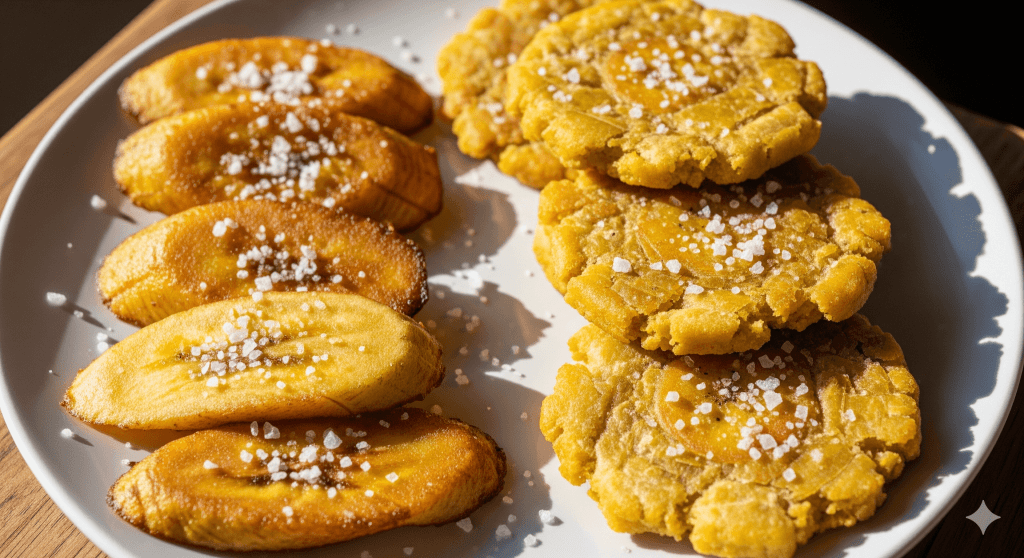
Here’s a family secret for you. The perfect “tostones,” in my opinion, are made with green plantains, specifically the “plátano burro” variety. The trick isn’t just frying them, but the double-fry process: you cut them into thick slices, fry them once, take them out, and then you “eschancha” them—that’s our Cuban slang for smashing them flat—before frying them a second time until they are golden and crispy on the outside, but soft on the inside. With a pinch of salt, they are addictive.
Yuca con Mojo: Simplicity Taken to Another Level of Flavor
Yuca (cassava) is a noble and delicious root vegetable, but the magic happens when it’s drenched in Cuban mojo. Imagine the soft, boiled yuca covered in a hot sauce of olive oil, crushed garlic, sour orange juice, and salt. That simple combination is so powerful and flavorful that it can steal the spotlight from any meat.
The Sweet Finale: Cuban Desserts That Will Steal Your Heart
No meal is complete without a good dessert, and in Cuba, we have a serious sweet tooth.
Flan de Huevo: The Homemade Dessert That Never Fails

And to finish, nothing beats a classic you’ll find in every restaurant and home: flan. That wonderful dessert made with eggs, milk, and a rich caramel topping is the definition of homemade sweetness. It’s simple, creamy, and as we say, “muy rico también” (very tasty too). Every family has their own little trick to make it perfect.
Other Essential Sweets: From Tres Leches to Arroz con Leche
Beyond flan, our dessert repertoire is extensive. The Tres Leches cake, a sponge cake soaked in three types of milk (evaporated, condensed, and heavy cream), is an absolute delight. And of course, Arroz con Leche (rice pudding), sprinkled with cinnamon, transports us directly back to our childhood.
Frequently Asked Questions About Cuban Food
So, what is the official national dish of Cuba?
Officially, Ropa Vieja is recognized as the national dish of Cuba due to its history, popularity, and its representation of the cultural mix that defines our cuisine.
Is authentic Cuban food spicy?
No, this is a common myth. Cuban food is very well-seasoned, but not spicy-hot. We use garlic, onion, cumin, oregano, and sweet peppers to build flavor, but almost never hot chilies. Our focus is on deep flavor (“sazón”), not heat.
What is a traditional drink to accompany the meal?
A cold national beer (like a Cristal or Bucanero) is the perfect companion for most of these dishes. Of course, a good mojito or a Cuba Libre are also classic choices to whet the appetite or enjoy after the meal.
Conclusion: Cuban Food is Flavor, History, and Home
As you can see, the most popular food in Cuba is just the beginning. Every dish tells a story of our island, our grandmothers, our celebrations, and our daily lives. It is an honest, powerful cuisine made from the heart. I hope this journey has whetted your appetite and, above all, your curiosity to try the true taste of my homeland.
Related posts:
![Best Sunset Spots in Havana: Malecón, El Morro & Rooftops]()
Best Sunset Spots in Havana: Malecón, El Morro & Rooftops
![Havana Hidden Gems: My Guide to Finding the Real, Authentic Cuba]()
Havana Hidden Gems: My Guide to Finding the Real, Authentic Cuba
![7 Things NOT to Do in Cuba: An Insider's Guide]()
7 Things NOT to Do in Cuba: An Insider's Guide
![Ultimate Havana Travel Guide: Experience the Soul of Cuba Like a Local]()
Ultimate Havana Travel Guide: Experience the Soul of Cuba Like a Local
![Cuba Packing List (2025): Your Essential Guide]()
Cuba Packing List (2025): Your Essential Guide
![Cuban Street Food: What to Expect (Snacks & Drinks)]()
Cuban Street Food: What to Expect (Snacks & Drinks)
![Is Cuba Safe to Travel to in 2025? The Unfiltered Truth You Need to Know]()
Is Cuba Safe to Travel to in 2025? The Unfiltered Truth You Need to Know
![10 Must-See Places to Visit in Cuba (A Local's Guide)]()
10 Must-See Places to Visit in Cuba (A Local's Guide)







Leave a Reply to Havana Hidden Gems: An Insider's Guide to Authentic CubaCancel reply