Planning a trip to Cuba is exciting, but let’s be honest: the two biggest headaches for any traveler are figuring out the money situation and trying to get online. Forget the outdated advice and confusing forum posts. I’m going to give you the practical, on-the-ground reality of how to navigate cash and connectivity in Cuba, based on real, local experience. This is the guide I wish I had on my first visit.
The Real Deal on Cuban Money: Forget Everything You’ve Read
First things first: the money system in Cuba can seem complex, but the golden rule for any tourist is simple: your life will be much, much easier if you understand the difference between the official story and the street reality.
CUP vs. MLC: Understanding the Two-Currency Puzzle
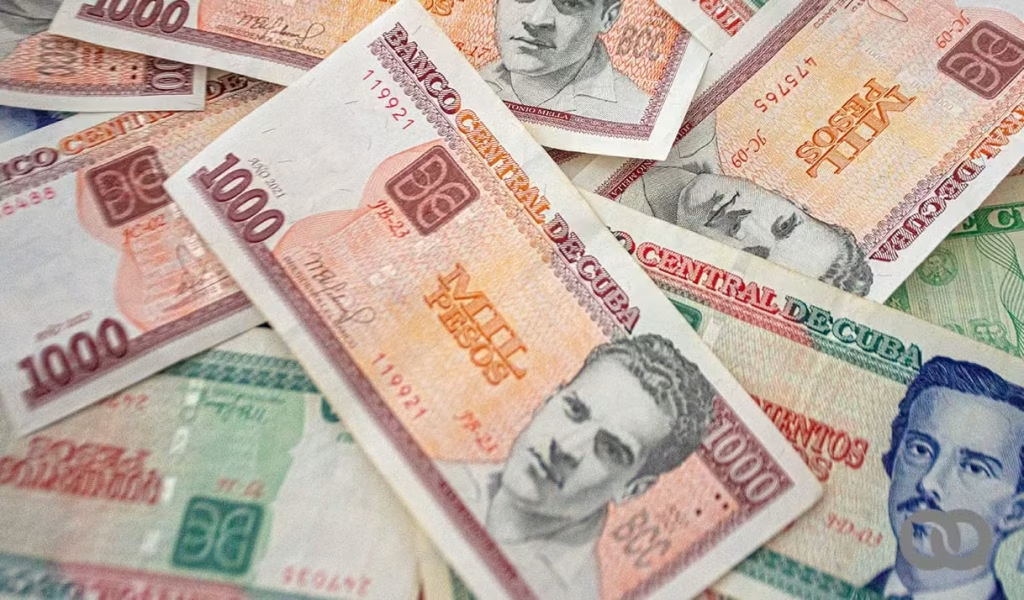
Officially, the only Cuban currency is the Cuban Peso (CUP). This is what you’ll use for most everyday things like street food, local taxis, and market shopping.
You might also hear about MLC (Moneda Libremente Convertible), which isn’t a physical currency but a digital one, pegged to the US dollar. It’s used in specific government-run stores for imported goods. As a tourist, you likely won’t use MLC directly, but it’s a key reason why the currency situation is so complicated and why foreign cash is so valued.
Why the Informal Market is Your Best Bet (And How to Use It)
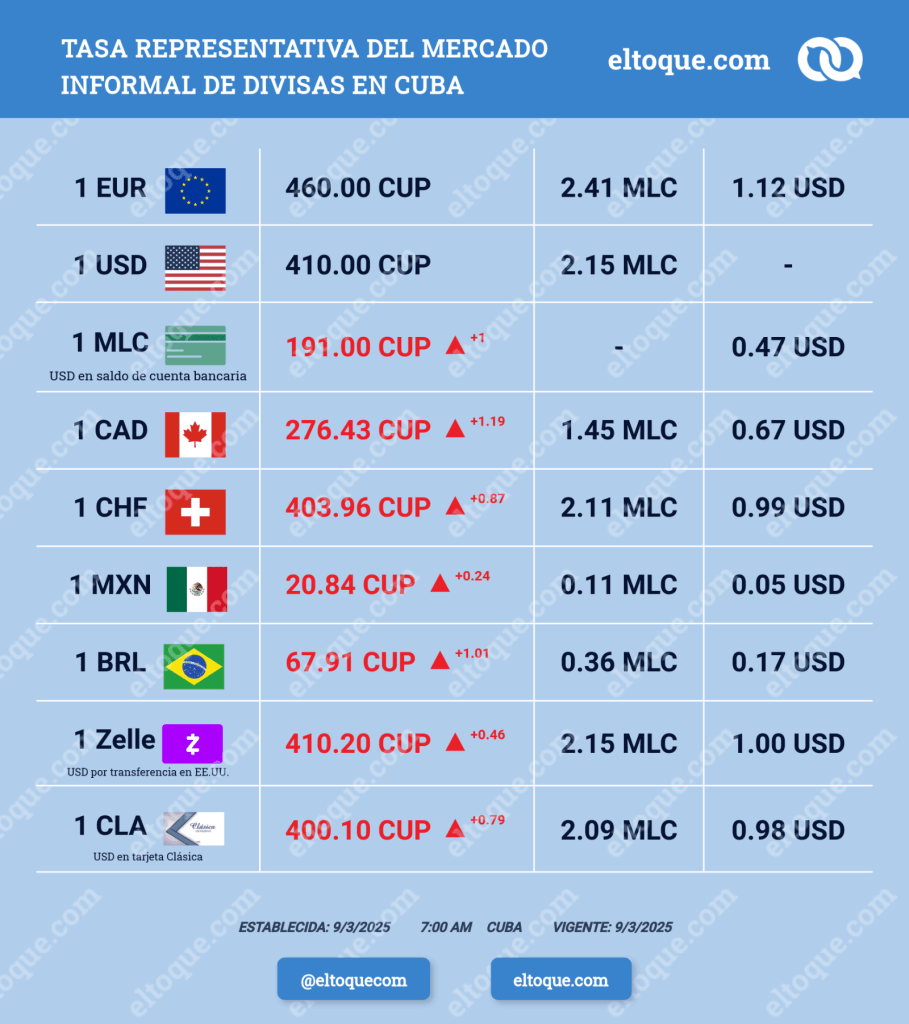
Here’s the most important piece of advice you’ll get: do not exchange your money at the airport or an official government exchange house (CADECA). The official exchange rate is artificially low and does not reflect the real value that Cubans place on foreign currency.
Your best friend will be the informal market. When I’m there, it’s the only way I exchange money. You’ll get a significantly better rate for your Dollars, Euros, or Pounds. The rate changes daily, sometimes even hourly. To know exactly what the going rate is, check the independent online platform eltoque.com. It’s what everyone on the island uses to stay updated. Don’t even think about exchanging without checking the rate there first.
Practical Tips: Exchanging Money Safely and Checking the Real Rate
Exchanging money informally might sound intimidating, but it’s the standard way of life. However, you need to be smart about it. Scams can happen. From my own experience, the safest way to do it is to ask for help from someone you trust, like the owner of your casa particular (guesthouse). They can often exchange it for you directly or connect you with a reliable person.
My personal rules are simple: never exchange with a random person who approaches you on the street, and if possible, don’t do it alone. Go with a friend or a trusted local. This ensures you get a fair rate and a safe transaction.
Cash is King: The Truth About Using Credit Cards and ATMs
This is non-negotiable: Cuba is a cash-based society. Bring enough cash (preferably Euros, as they are often preferred and avoid the political issues tied to USD) to cover your entire trip.
Your credit and debit cards, especially if they’re from American banks, will not work in 99% of places. While you might find a few ATMs in major tourist hotels in Havana, they are notoriously unreliable. They can be out of cash, offline, or simply reject your card for no reason. Don’t count on them as anything other than a last-ditch emergency option.
Navigating the Internet in Cuba: Patience is a Virtue
Now for the second big challenge: getting online. If you’re expecting fast, reliable Wi-Fi, it’s time for a reality check.
Setting Expectations: The Reality of Cuba’s Internet Speed
Let me be blunt: the internet in Cuba is painfully slow. I’d go as far as to say it’s the slowest internet I’ve ever had to deal with. Forget about streaming videos, uploading large files, or even having a smooth video call. Basic tasks like checking emails, sending messages on WhatsApp, and light browsing are achievable, but they will require patience. Download offline maps (like Maps.me) and anything else you need before you arrive.
The Tourist SIM Card: Your Basic Gateway to Getting Online
The most straightforward way to get connected is by buying a tourist SIM card from ETECSA, the state-run telecommunications company. You can often find a kiosk at the airport upon arrival or visit one of their offices in any major city. Expect a queue.
The tourist SIM will give you a package with a set amount of mobile data, which is usually enough for a short trip if you use it sparingly. It’s your most reliable option for on-the-go connectivity.
The Monthly Data Trap: What ETECSA Won’t Tell You About Top-Ups
Here’s an insider tip that most guides miss. The standard mobile data plans sold by ETECSA can only be purchased at the standard rate once a month. If you run out of data before your 30-day cycle is up and want to top up, the official rate is incredibly expensive.
This has created a huge resale market. What do locals do? They buy data from other people. In my case, I’ve seen it firsthand: a standard plan that costs 360 CUP can be resold for as much as 1500 CUP on the street. It’s a classic supply-and-demand situation. If you’re a heavy data user, be prepared for this reality or buy a much larger package than you think you’ll need from the start.
Wi-Fi Parks and Hotels: The Pros and Cons
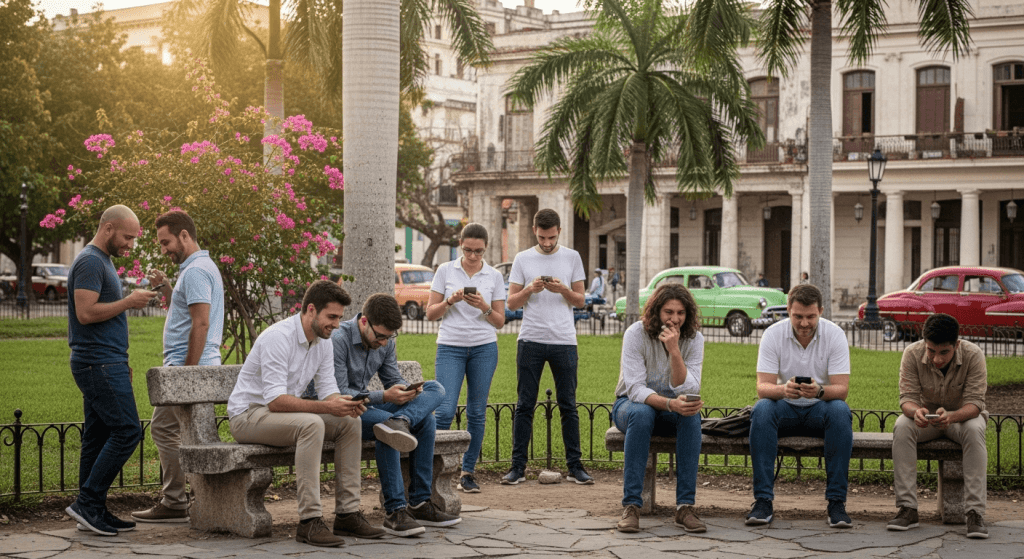
Before SIM cards were common, the only way to get online was by using Wi-Fi hotspots in public parks or hotels. You’d buy a scratch-off Nauta card, which gives you an hour of internet access. This system still exists. You’ll recognize a Wi-Fi park by the dozens of people gathered on benches, all staring at their phones. It works for a quick check-in, but it’s slow, public, and not secure.
The Ultimate Hack for Longer Stays: Private Home Wi-Fi
If you’re staying in Cuba for an extended period, the ETECSA options will drive you crazy. Here’s an advanced tip: a growing number of people are setting up private, non-state Wi-Fi in their homes. This is a bit of an “underground” solution and you won’t find it advertised. The best thing I ever did was get a private connection installed at home. You have to ask around, talk to locals, and investigate your options. It’s a game-changer for anyone needing more stable internet access.
A Quick Word on VPNs: Why You Absolutely Need One
Some websites and apps (including certain banking apps) are blocked in Cuba. Furthermore, public Wi-Fi networks are not secure. For these two reasons, using a VPN (Virtual Private Network) is essential. Install and test it on your phone and laptop before you leave for Cuba.
Final Checklist & Key Takeaways
Tabla Comparativa: Opción Oficial vs Opción Real – Cuba
Análisis comparativo de tasas de cambio y opciones de conectividad (Actualizado: 2025)
| Servicio | Opción Oficial | Opción Real |
|---|---|---|
| CAMBIO DE DIVISAS (USD a CUP) | ||
| Tasa de Cambio |
1 USD = 120 CUP
CADECA (Casas de Cambio Oficiales)
|
1 USD = 410 CUP
Mercado informal/paralelo
|
| Diferencia | Tasa oficial fijada por el Banco Central de Cuba | 342% más alto que la tasa oficial |
| Disponibilidad | Limitada, requiere trámites bancarios | Ampliamente disponible en el mercado informal |
| COMPRA DE DATOS MÓVILES | ||
| Proveedor | ETECSA (Monopolio estatal) | eSIMs internacionales (GigSky, Yesim, Kolet) |
| Planes Económicos |
Plan 120 CUP: 2 GB + 15 min + 20 SMSPlan 240 CUP: 4 GB + 35 min + 40 SMSPlan 360 CUP: 6 GB + 60 min + 70 SMSLímite: 360 CUP mensuales de recarga |
GigSky: Plan ilimitado 30 días = 67.49 USDOtros: 1 GB por 7 días ≈ 9.99 USDSin límites de recarga |
| Planes Premium |
3 GB = 3,360 CUP 7 GB = 6,720 CUP 15 GB = 11,760 CUP Hasta 13x más caro que antes |
4 GB = 10 USD 8 GB + 75 min = 20 USD 16 GB = 35 USD Precios en USD, acceso directo |
| Velocidad/Calidad | Promedio: 4.13 Mbps móvil Una de las más bajas del mundo |
Variable, puede ser mejor que ETECSA Depende de infraestructura local |
| Restricciones | Acceso restringido a sitios web Bloqueo de aplicaciones (TikTok, etc.) Censura gubernamental |
Acceso sin restricciones Permite acceder a sitios bloqueados Sin censura (PayPal, TikTok, etc.) |
| Forma de Pago | Saldo del celular (planes combinados) Transfermóvil/Servicios en línea (planes extras) |
Tarjeta de crédito/débito internacional Requiere cuenta en el extranjero |
| Ventajas |
|
|
| Desventajas |
|
|
| ANÁLISIS COMPARATIVO | ||
| Relación Calidad-Precio | Baja: Precios altos con servicio limitado | Media-Alta: Mejor acceso pero barreras de entrada |
| Recomendación | Adecuado para uso básico y residentes sin acceso a divisas | Ideal para trabajadores remotos, turistas y quienes necesitan acceso sin restricciones |
Tasa oficial fijada por el Banco Central de Cuba
Disponibilidad: Limitada, requiere trámites bancarios
Proveedor: ETECSA (Monopolio estatal)
Planes Económicos:
Límite: 360 CUP mensuales de recarga
Planes Premium:
Hasta 13x más caro que antes
Velocidad: Promedio: 4.13 Mbps móvil
Restricciones: Acceso restringido, bloqueo de apps, censura
Pago: Saldo del celular/Transfermóvil
- Legal y regulado
- Incluye minutos y SMS
- Fácil acceso para residentes
- Límite de 360 CUP mensuales
- Precios elevados en planes extras
- Restricciones de acceso
- Velocidad baja
342% más alto que la tasa oficial
Disponibilidad: Ampliamente disponible en el mercado informal
Proveedor: eSIMs internacionales (GigSky, Yesim, Kolet)
Planes Económicos:
Sin límites de recarga
Planes Premium:
Precios en USD, acceso directo
Velocidad: Variable, puede ser mejor que ETECSA
Restricciones: Acceso sin restricciones, sin censura
Pago: Tarjeta internacional
- Sin límites de datos
- Acceso sin restricciones
- Precios competitivos en USD
- Mejor privacidad
- Requiere tarjeta internacional
- No incluye número telefónico local
- Dificultad de acceso para residentes
- Depende de infraestructura ETECSA
Relación Calidad-Precio:
Oficial: Baja (Precios altos con servicio limitado)
Real: Media-Alta (Mejor acceso pero barreras de entrada)
Recomendación:
● Oficial: Adecuado para uso básico y residentes sin acceso a divisas
● Real: Ideal para trabajadores remotos, turistas y quienes necesitan acceso sin restricciones
- Bring Cash: Carry enough Euros or USD to last your entire trip. Don’t rely on cards.
- Exchange Informally: Use
eltoque.comto check the real rate and exchange with trusted locals for a much better deal. - Manage Internet Expectations: It will be slow. Download offline maps and essential documents beforehand.
- Buy a Tourist SIM: It’s your best bet for mobile data, but be mindful of the data cap.
- Use a VPN: Ensure your digital privacy and access to all necessary websites.
Frequently Asked Questions (FAQs)
Should I bring USD or Euros to Cuba?
While both are widely accepted on the informal market, Euros are often preferred. They don’t carry the political baggage of the US dollar and sometimes fetch a slightly better exchange rate.
Can I use my American credit or debit card in Cuba?
No. Due to the U.S. embargo, cards issued by American banks will not work anywhere in Cuba.
Is it safe to exchange money on the street?
It is safe if you are smart about it. Avoid random strangers. The most secure way is to ask the owner of your casa particular or another trusted local contact to help you. Always count the money carefully before handing yours over.
How much does a SIM card cost in Cuba?
Prices are set by ETECSA and can change, but you can expect the tourist package to cost around $25-$35 USD. This typically includes an initial data package of several gigabytes, some minutes, and texts.





Leave a Reply to Cuba Packing List (2025): Your Essential GuideCancel reply