Why Southeast Asia? More Than Just an Epic Trip, It’s an Experience
Ah, Southeast Asia. I’ve spent over 14 months of my life combined exploring this corner of the world, and if there’s one thing I can tell you, it’s this: it’s one of the best places on the planet for backpacking.
It’s an incredible assault on the senses in the best way possible. We’re talking legendary street food, vibrant culture, rich history, stunning sunsets, and epic experiences around every corner.
But let’s be honest—planning a trip here is as exciting as it is overwhelming. I remember my first trip back in 2012; I spontaneously decided to take a career break and landed in Thailand with almost no research. I learned on the fly, and that’s part of the magic.
This guide isn’t just a list of places. It’s built on a decade of my personal travels. It’s about finding a balance between the “big stuff” you see on Instagram and the “small stuff” that truly makes a journey memorable.
My best memories aren’t from the famous temples, but from the small moments: having a beer watching the sunset over the Mekong, or getting invited to a village karaoke party by a traveler I met that morning.
Planning Your Route: The Classic “Banana Pancake Trail” and How to Make It Your Own
If you’re wondering where to begin, there’s a well-trodden path that has become a rite of passage for backpackers: the “Banana Pancake Trail.”
It’s not a formal route with signs, but a logical, well-connected loop through mainland Southeast Asia. I’ve accidentally done it three or four times without knowing its name, simply because it makes so much sense.
The Core Route: Your Perfect Start (Bangkok to Cambodia)
For any first-timer, this is the itinerary I’d recommend every single time. It’s easy, affordable, and packed with highlights.
- 1. Start in Bangkok, Thailand: A major hub with cheap flights. It’s so much more than Khao San Road (though that’s a perfect way to kick off your trip and make friends instantly).
- 2. Head North to Chiang Mai: Take the overnight train! Here you’ll find mountains, ethical elephant sanctuaries, and a more relaxed vibe.
- 3. Cross into Laos via the Slow Boat: This two-day journey down the Mekong River to Luang Prabang is iconic. It’s not about speed; it’s about the scenery and the people you meet.
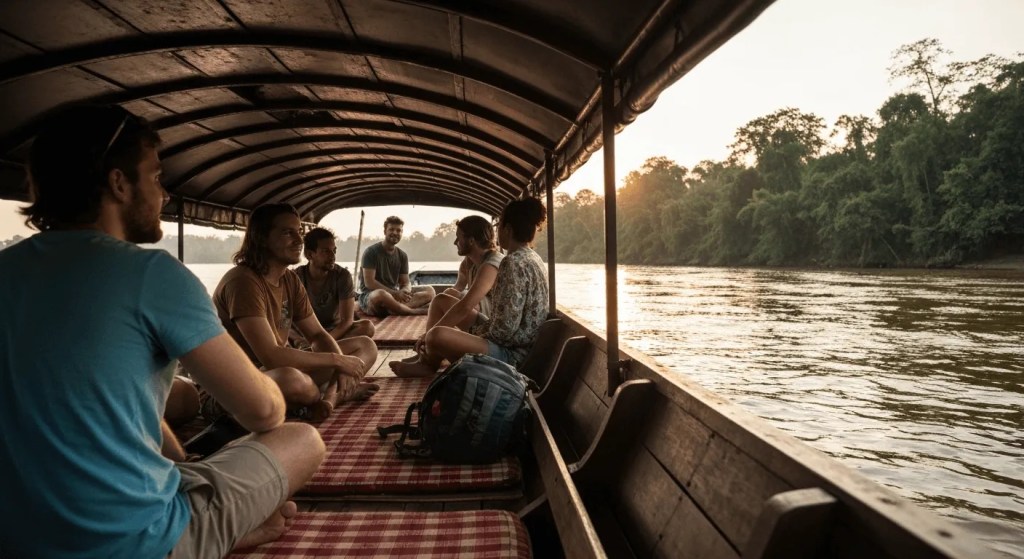
- 4. Journey into Vietnam: Start in the chaotic, vibrant city of Hanoi. From here, take a cruise in Ha Long Bay or—my personal recommendation—tackle the Ha Giang Loop by motorbike. You can hire an “Easy Rider” so you don’t even have to drive.
- 5. Finish in Cambodia: Learn about the heavy history in Phnom Penh and marvel at the sunrise over Angkor Wat in Siem Reap. Then, hit the southern islands like Koh Rong for some beach time.
Flexibility is Your Superpower
Here’s the most important piece of advice I can give you:
This itinerary is a framework, not a checklist. The biggest mistake is planning every single day. Things will go wrong. You’ll get sick, miss a ferry, or meet an amazing group and decide to join them. That’s the real magic of backpacking.
How Long Do You Need? Itineraries for 1, 2, and 3+ Months
Trying to cram too much into a short trip leads to burnout. You want to experience more and travel less.
- The 1-Month Whirlwind: Don’t do the whole loop. Pick a smaller section, like Thailand -> Laos -> Vietnam. This gives you a fantastic mix without the rush.
- The 2-Month Sweet Spot: This is ideal. It allows you to complete the core Thailand -> Laos -> Vietnam -> Cambodia route at a comfortable pace, with time for spontaneous detours.
- The 3+ Month Backpacker’s Dream: Now you’re talking! Complete the core route, then branch out to explore incredible archipelagos like the Philippines (for world-class beaches) or Indonesia (for volcanos, dragons, and going beyond Bali).
Budgeting in Southeast Asia: How Much It Really Costs
Southeast Asia is incredibly affordable. Here’s a sample daily budget to give you a clear idea.
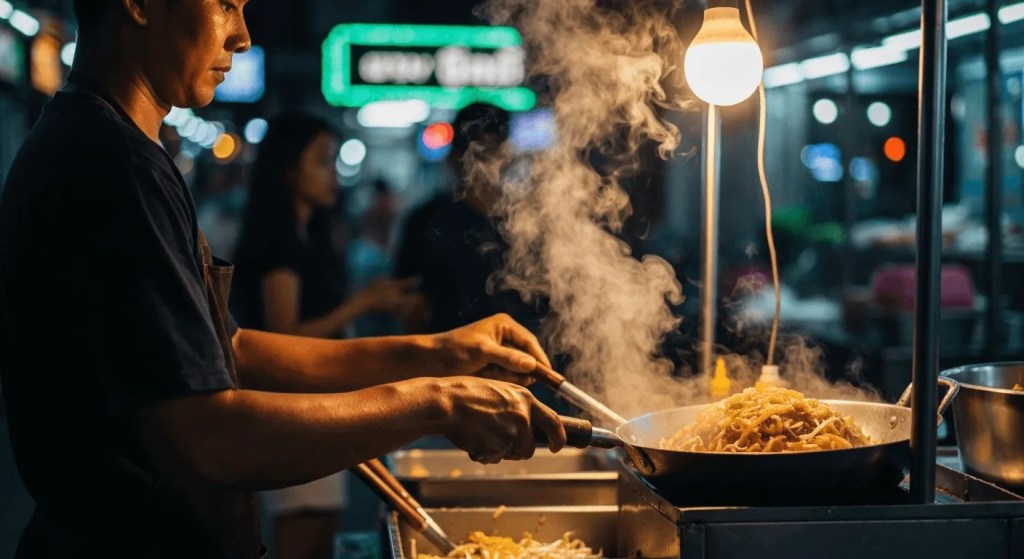
| Country | Accommodation (Dorm) | Food (Street/Local) | Activities/Transport | Est. Daily Total (USD) |
|---|---|---|---|---|
| Thailand | $8 – $15 | $10 – $15 | $15 – $20 | $33 – $50 |
| Vietnam | $6 – $12 | $8 – $12 | $10 – $20 | $24 – $44 |
| Laos | $5 – $10 | $7 – $12 | $15 – $25 | $27 – $47 |
| Cambodia | $5 – $10 | $8 – $15 | $10 – $20 | $23 – $45 |
Related posts:
![Lantern-lit café along Hanoi’s Train Street, with railway tracks running beside wooden balconies.]()
10 Hidden Gems in Southeast Asia (2025 Guide)
![Sunset over Havana seen from the Malecón, with locals on the seawall, vintage car lights and the skyline glowing near El Morro.]()
Best Sunset Spots in Havana: Malecón, El Morro & Rooftops
![Traveler holding a phone with a generic map in a Southeast Asian night market, lanterns and scooters blurred in the background.]()
Best Travel Apps for Southeast Asia: Must-Have Tools for 2025
![Overhead photo of Southeast Asian desserts—mango sticky rice, cendol, halo-halo, and khanom krok—styled on banana leaves and a rattan tray with natural warm light.]()
Southeast Asian Desserts: Must-Try Sweets by Country
![Havana Hidden Gems: My Guide to Finding the Real, Authentic Cuba]()
Havana Hidden Gems: My Guide to Finding the Real, Authentic Cuba
![10 Must-Try Balinese Foods: A Beginner's Food Guide (2025)]()
10 Must-Try Balinese Foods: A Beginner's Food Guide (2025)



My Secret Tip: The “Luxury Day” Fund
Set aside a separate budget—maybe $300—that you don’t touch. Traveling long-term is draining. This fund is your permission to check into a nice, clean, quiet hotel for a night or two to recharge when you’re feeling sick or exhausted. It’s an investment in your well-being.
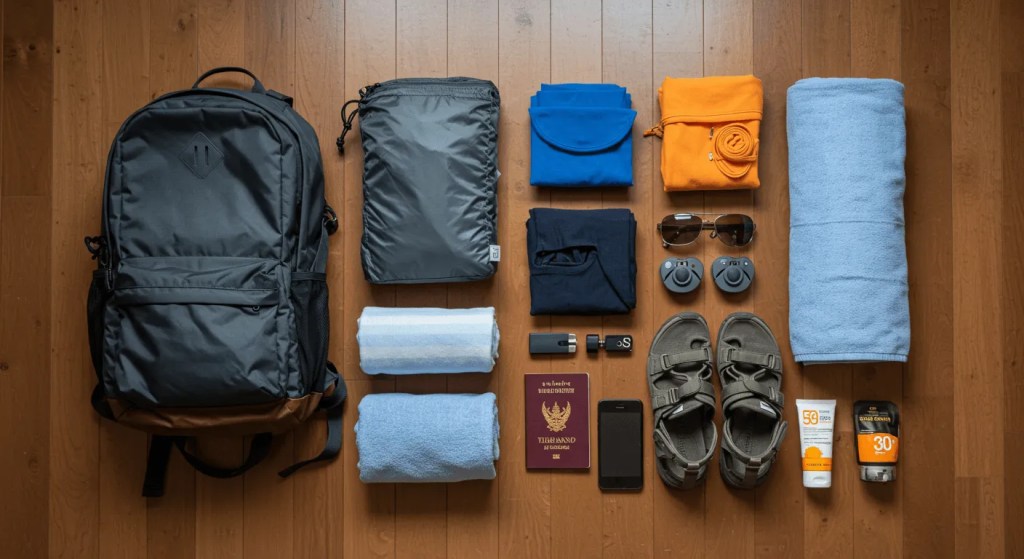
Packing Light is Not a Myth: Your Checklist
I see it all the time: backpackers wrestling with giant packs, sweating buckets. Please, learn from their mistakes and pack light.
✅ What to Pack (in a 40L backpack MAX):
- 5-6 T-shirts/Tops: Breathable fabrics are best.
- 2 Pairs of Shorts/Skirts
- 1 Pair of Long Trousers: For temples, hiking, or chilly evenings.
- 1 Warmer Layer: A hoodie or light jacket for A/C buses.
- Underwear & Socks for a week.
- Swimsuit.
- Sandals/Flip-flops & 1 pair of comfortable walking shoes.
- A quick-dry towel.
❌ What to Leave at Home:
- Jeans: Too heavy, take forever to dry.
- Too Many Shoes: You won’t wear them.
- Full-Sized Toiletries: Buy them there or use solid bars.
- Expensive Jewelry: Unnecessary and makes you a target.
Why? Laundry service is on every corner and costs just a few dollars. They wash, dry, and fold everything for you.
Beyond the Trail: Epic Experiences Worth Every Penny
While backpacking is about being frugal, some experiences are worth splurging on.
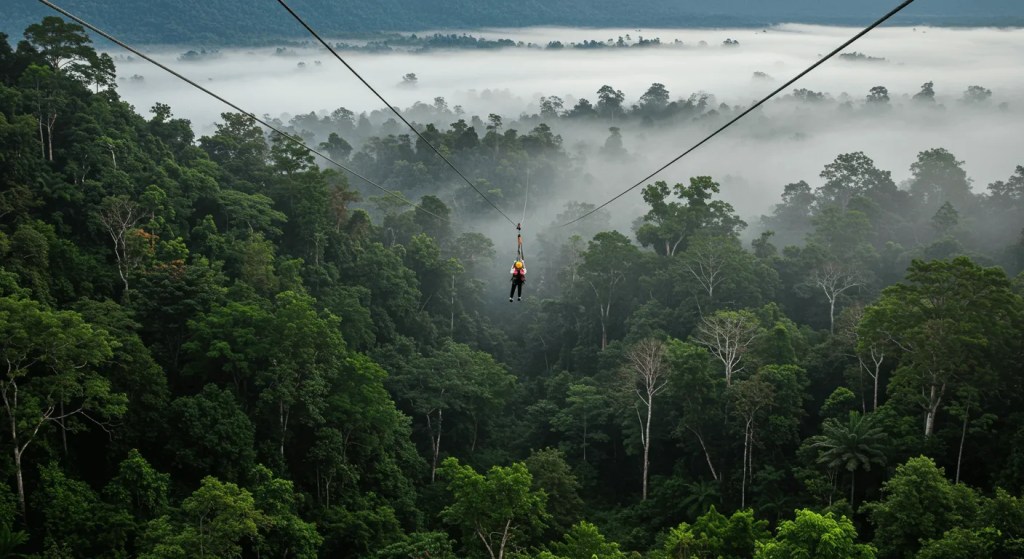
- The Gibbon Experience (Laos): Live in jungle treehouses connected by ziplines.
- Cave Expeditions (Phong Nha, Vietnam): Take a multi-day trek to sleep inside a colossal cave.
- Volcano Climbing (Indonesia): Hike active volcanoes like Mount Bromo for sunrise.
- Scuba Diving: The underwater world in Thailand, the Philippines, and Indonesia is world-class.
- A Sailing Trip (Indonesia/Philippines): Live on a boat for a few days, snorkeling and visiting remote islands.
Health, Safety, and Common Sense
Southeast Asia is generally very safe, even for solo females. The biggest dangers are usually less dramatic.
My $2,000 lesson: Travel insurance is non-negotiable. Years ago in Bali, a minor operation cost nearly $2,000. My $35 insurance policy covered everything. Don’t risk it.
As for food, yes, “traveler’s tummy” can happen. Pack some Imodium for emergencies (like a long bus ride), but don’t let fear stop you from enjoying the incredible street food.
Final Tip: Put Your Phone Away and Live the Moment
This is my last, and most important, piece of advice. I see so many travelers glued to their screens, walking through ancient streets with headphones on, missing everything.
You need to live Southeast Asia. Don’t experience it through a phone. Inhale it. Hear it. Feel it. The best moments happen when you look up.
You’ll come home with a tan, probably a small scar from falling off a motorbike (we’ve all done it), and a million mistakes under your belt. But you’ll also come home with memories that will last a lifetime, already planning your next trip back.
FAQs
Is Southeast Asia safe for solo female travelers?
Yes, it’s considered one of the safest regions in the world for solo travelers. The main concern is petty theft, not violent crime, so just use standard travel precautions.
Do I need to arrange visas before I travel?
It depends on your nationality. Many countries offer 30-day visa exemptions on arrival. However, some, like Vietnam, may require an e-visa in advance. Always check the official embassy website for your specific passport before you go.
Is it better to use cash or card in Southeast Asia?
Cash is essential. While cards are accepted in large hotels and restaurants, you’ll need cash for daily expenses like street food, markets, and local transport. Use ATMs from reputable banks to withdraw local currency.
Related posts:
![Sunset over Havana seen from the Malecón, with locals on the seawall, vintage car lights and the skyline glowing near El Morro.]()
Best Sunset Spots in Havana: Malecón, El Morro & Rooftops
![Bangkok street food stalls at a Southeast Asia night market, travelers buying local dishes under white tents.]()
Avoid Tourist Traps & Scams in Southeast Asia (2025 Guide)
![Lantern-lit café along Hanoi’s Train Street, with railway tracks running beside wooden balconies.]()
10 Hidden Gems in Southeast Asia (2025 Guide)
![Havana Hidden Gems: My Guide to Finding the Real, Authentic Cuba]()
Havana Hidden Gems: My Guide to Finding the Real, Authentic Cuba
![The Real Best Time to Visit Southeast Asia: A Traveler's Guide]()
The Real Best Time to Visit Southeast Asia: A Traveler's Guide
![10 Must-Try Balinese Foods: A Beginner's Food Guide (2025)]()
10 Must-Try Balinese Foods: A Beginner's Food Guide (2025)
![Traveler holding a phone with a generic map in a Southeast Asian night market, lanterns and scooters blurred in the background.]()
Best Travel Apps for Southeast Asia: Must-Have Tools for 2025
![My Hunt for the Best Night Market Food in Southeast Asia: A First-Hand Guide]()
My Hunt for the Best Night Market Food in Southeast Asia: A First-Hand Guide


Leave a Reply