A Beginner’s Guide to Balinese Food: 10 Must-Try Dishes & Local Secrets
So, you’re heading to Bali? Get ready for an adventure that will delight all your senses, especially your taste buds. But let’s be honest, opening a Balinese menu for the first time can feel like trying to read a secret code.
Don’t worry. I’ve done the delicious “research” for you. This guide will turn you from a nervous beginner into a confident foodie.
In this guide, you’ll discover:
- ✅ The 3 essential words to understand any menu.
- ✅ 10 must-try dishes, from street-food icons to restaurant favorites.
- ✅ A local’s secret for decoding bills and saving money.
- ✅ My personal go-to spots in Sanur.
Before You Eat: 3 Things Every Beginner in Bali Should Know
Master these three simple concepts, and you’ll navigate the Balinese food scene like a pro from day one.

1. The Language of Food: Nasi, Mie, and Goreng
You’ll see these words everywhere. They are the simple building blocks of Indonesian cuisine.
- 🍚 Nasi = Rice
- 🍜 Mie = Noodle
- 🔥 Goreng = Fried
It’s that easy! Now you know that Nasi Goreng is the famous fried rice and Mie Goreng is its equally delicious fried noodle counterpart.
2. The Spice Level: How to Handle the Heat
Balinese food gets its soul from sambal, a potent chili paste. While many tourist spots tone it down, an authentic meal will have a kick.
“On my first visit to a local warung, I asked for my food ‘Indonesian spicy.’ They smiled and delivered. The flavor was incredible, but there was a serious punch of chili in the back of that. It was a lesson well-learned!”
Your Spice Strategy:
- Start slow: Order your food “not spicy” (tidak pedas).
- Ask for it separately: Request the chili on the side (sambal pisah). This way, you control the heat.
3. The “Plus Plus” Secret: A Key to Understanding Prices
Ever see “++” next to a price on a menu? It’s not a typo. It’s a crucial detail that affects your wallet.
- First ‘+’: 10% government tax.
- Second ‘+’: A service charge, usually between 5% and 11%.
This can add up to 21% to your bill! Keep in mind that most small, local eateries (warungs) do not add these charges, which is another great reason to eat local.
Price Check: Warung vs. Restaurant
To give you a real-world idea of costs, here’s a quick comparison based on my experience. This table shows how choosing a local warung over a tourist-focused restaurant can impact your budget.
| Dish | Typical Warung Price (Local) | Typical Restaurant Price (Tourist) |
|---|---|---|
| Nasi / Mie Goreng | ~$3.50 USD | ~$8-9 USD |
| Sate Skewers (6 pieces) | ~$2.00 USD | ~$5.00 USD |
| Seafood Platter | N/A | ~$11.00+ USD |
The Beginner’s Checklist: 10 Must-Try Balinese Dishes
Here are the dishes you simply can’t leave Bali without trying, broken down into essentials and local favorites.
Part 1: The Famous Icons
1. Nasi Goreng & Mie Goreng
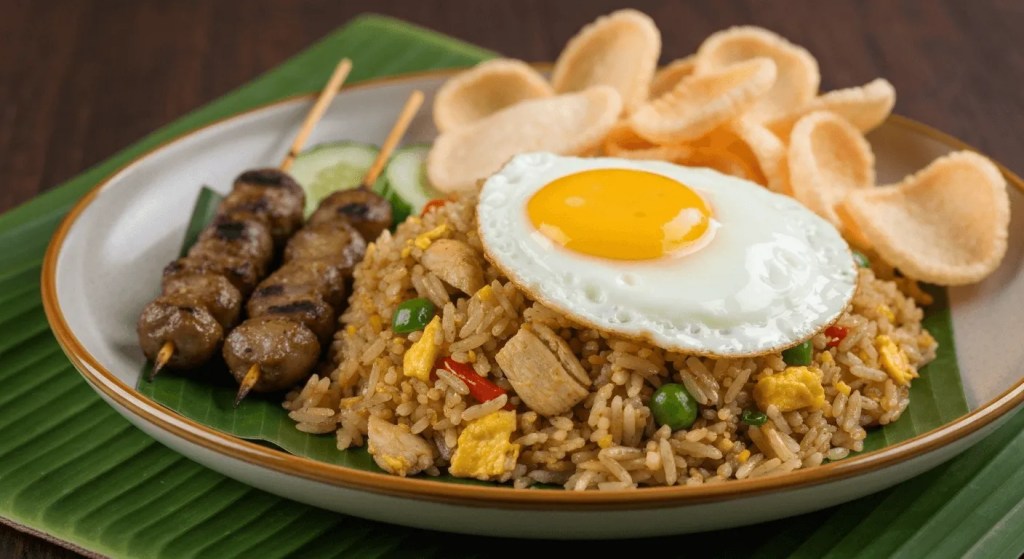
The undisputed champions. You can’t go wrong with either.
- What it is: Your choice of fried rice or noodles, loaded with veggies and often topped with a fried egg.
- Tastes like: Savory, sweet, and deeply satisfying. A perfect balance of flavors.
- My Tip: Better and cheaper at a local warung. The “special” versions just add a bit more meat or a sate stick.
2. Sate Skewers
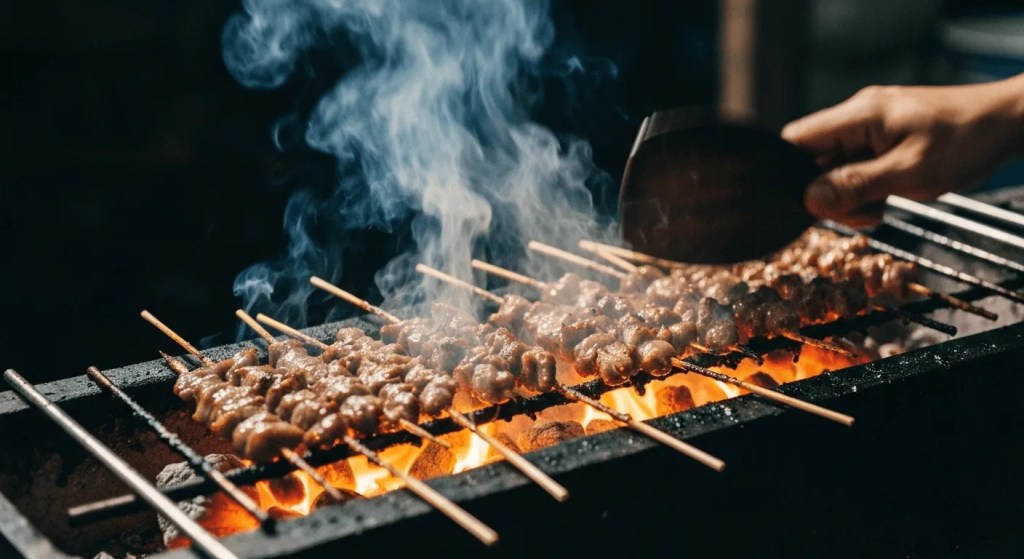
Grilled meat on a stick, elevated to an art form.
- What it is: Skewers of chicken, pork, or beef grilled over hot coals.
- Tastes like: Smoky, tender, and caramelized meat smothered in a rich, silky peanut sauce.
- My Tip: Find a street vendor grilling them on a cart for the most authentic (and cheapest) experience.
3. Soto Ayam
The ultimate Balinese comfort food in a bowl.
- What it is: A fragrant chicken soup with vermicelli noodles, cabbage, and a boiled egg.
- Tastes like: A light, aromatic, and warming chicken broth. You add your own spice with the side of sambal.
- My Tip: Spoon some of your steamed rice directly into the soup. It makes the dish even heartier.
4. Tuna Pepes
A fresh and healthy dish that’s bursting with flavor.
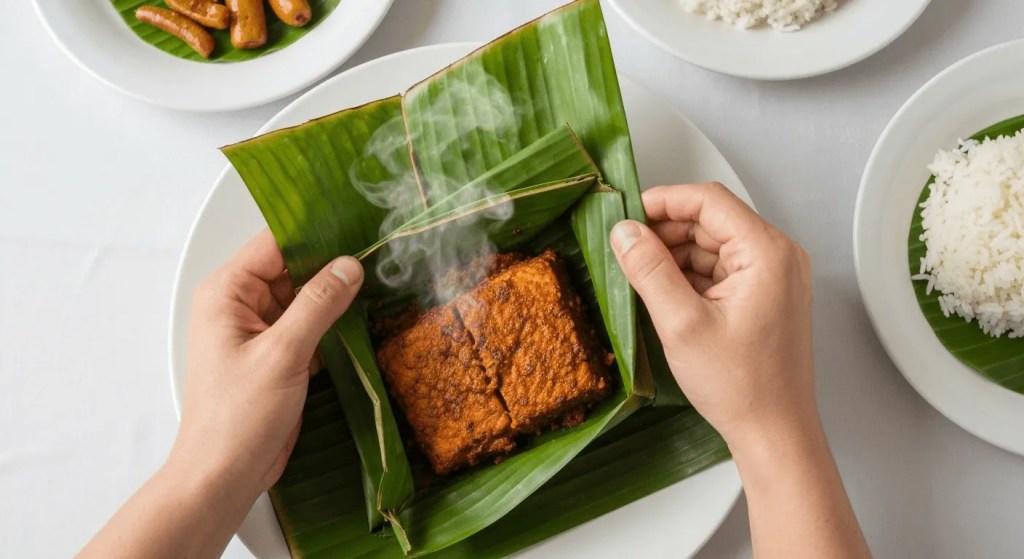
- What it is: Spiced tuna wrapped in a banana leaf and then steamed or grilled.
- Tastes like: Incredibly moist and fragrant. The banana leaf infuses the fish with a unique, earthy aroma.
- My Tip: My favorite version is at Mona Lisa restaurant in Sanur. It’s consistently perfect.
5. Beachside Grilled Seafood
A splurge that’s worth every penny.

- What it is: The freshest catch of the day—fish, prawns, scallops—grilled over coconut husks.
- Tastes like: Pure, smoky seafood flavor enhanced by a classic Balinese sauce of ginger, galangal, and turmeric.
- My Tip: Go to a place like Amphibia on Sanur beach where you can see the fishermen delivering their catch. It doesn’t get fresher than that.
Related posts:
![Traveler holding a phone with a generic map in a Southeast Asian night market, lanterns and scooters blurred in the background.]()
Best Travel Apps for Southeast Asia: Must-Have Tools for 2025
![The Ultimate Southeast Asia Travel Guide: A First-Hand Itinerary for Backpackers]()
The Ultimate Southeast Asia Travel Guide: A First-Hand Itinerary for Backpackers
![The Real Best Time to Visit Southeast Asia: A Traveler's Guide]()
The Real Best Time to Visit Southeast Asia: A Traveler's Guide
![Lantern-lit café along Hanoi’s Train Street, with railway tracks running beside wooden balconies.]()
10 Hidden Gems in Southeast Asia (2025 Guide)
![Bangkok street food stalls at a Southeast Asia night market, travelers buying local dishes under white tents.]()
Avoid Tourist Traps & Scams in Southeast Asia (2025 Guide)
![Overhead of a Southeast Asian street-food breakfast spread—fried fish, papaya salad, grilled chicken, soups and sauces on a red table.]()
Southeast Asia Breakfast Guide: 15 Dishes + Map & Tips


Part 2: The Local Favorites
6. Tipat Cantok
A surprising dish that will challenge your idea of a “salad.”
- What it is: Compressed rice cakes and bean sprouts in a peanut sauce.
- Tastes like: A delightful contrast of soft rice cakes and a nutty, spicy, and slightly sweet sauce.
7. Kangkung
You will be shocked at how delicious a simple vegetable dish can be.
- What it is: Water spinach, stir-fried at blistering heat with garlic and chili.
- Tastes like: Fresh, garlicky, and spicy. It’s the perfect side dish to cut through richer flavors.
8. Rujak
A fruit salad unlike any you’ve had before.
- What it is: A mix of crunchy, unripe fruits like pineapple and apple in a thick palm sugar and chili sauce.
- Tastes like: A bizarre but addictive combination of sweet, spicy, and sour. A true local experience!
9. Urab
A healthy and delicious vegetable side.
- What it is: A mix of steamed vegetables (like bean sprouts and green beans) with a spiced grated coconut dressing.
- Tastes like: Fresh, savory, and with a lovely texture from the coconut.
10. Es Daluman
The perfect antidote to a spicy meal or a hot day.
- What it is: A sweet drink of coconut milk and palm sugar, filled with jiggly green grass jelly.
- Tastes like: Cool, sweet, and incredibly refreshing.
My Final Advice: Eat Like a Local
If I can leave you with one piece of advice, it’s this:
“While a fancy restaurant is great for the view, the soul of Balinese food lives in the humble warungs. Don’t be afraid to wander down a side street and pick a place that’s busy with locals. That’s where you’ll find the magic.”
- Mona Lisa: Best for a reliable, delicious sit-down meal.
- Amphibia: My top choice for fresh seafood right on the beach.
- Warung Men Runtu: For an authentic, cheap, and tasty local breakfast.
Frequently Asked Questions
What is the most popular food in Bali?
Nasi Goreng and Mie Goreng are the undisputed kings, available everywhere from street carts to high-end hotels.
How much should I budget for food per day in Bali?
You can eat very well on a budget. Sticking to warungs, you could spend less than $20/day. For mid-range restaurants, $30-$40 is a comfortable budget.
Is it safe to eat street food in Bali?
Yes, for the most part. The golden rule is to choose vendors who are busy with a steady stream of customers, especially locals. This ensures the food is fresh.
Related posts:
![The Ultimate Southeast Asia Travel Guide: A First-Hand Itinerary for Backpackers]()
The Ultimate Southeast Asia Travel Guide: A First-Hand Itinerary for Backpackers
![Overhead of a Southeast Asian street-food breakfast spread—fried fish, papaya salad, grilled chicken, soups and sauces on a red table.]()
Southeast Asia Breakfast Guide: 15 Dishes + Map & Tips
![The Real Best Time to Visit Southeast Asia: A Traveler's Guide]()
The Real Best Time to Visit Southeast Asia: A Traveler's Guide
![Traveler holding a phone with a generic map in a Southeast Asian night market, lanterns and scooters blurred in the background.]()
Best Travel Apps for Southeast Asia: Must-Have Tools for 2025
![Bangkok street food stalls at a Southeast Asia night market, travelers buying local dishes under white tents.]()
Avoid Tourist Traps & Scams in Southeast Asia (2025 Guide)
![My Hunt for the Best Night Market Food in Southeast Asia: A First-Hand Guide]()
My Hunt for the Best Night Market Food in Southeast Asia: A First-Hand Guide
![Southeast Asian Desserts: Must-Try Sweets by Country]()
Southeast Asian Desserts: Must-Try Sweets by Country
![Lantern-lit café along Hanoi’s Train Street, with railway tracks running beside wooden balconies.]()
10 Hidden Gems in Southeast Asia (2025 Guide)

Leave a Reply